Projects

CapMob: making the coexistence of buses, trams, bicycles, and pedestrians safer and smoother

In Besançon (France), Keolis is piloting CapMob, a collaborative initiative carried out with local teams and regional stakeholders to improve coexistence between buses, trams, pedestrians, cyclists, and scooter users. Its goal: to reduce risky situations and traffic delays by identifying areas of tension and then developing tailored solutions with stakeholders. To achieve this, CapMob cross-references operational and safety data with feedback from the field, then maps these findings to identify priority actions that go beyond individual perceptions. Discover the benefits of this three-step approach, as well as how it’s being implemented in the Besançon area.

Partners

    Posted

    OCT. 8, 2026

    Share on

    Expected benefits for safety and smoother traffic

    Buses, trams, bicycles, scooters and pedestrians sometimes share the road without suitable infrastructure. Close overtaking, emergency braking and unclear right-of-way rules can create hazardous situations, slow buses down and affect the daily lives of both drivers and passengers. CapMob aims to make the different modes of transport safer and more harmonious when sharing the road.

    To build a shared assessment, the approach combines operational and safety data with feedback from the field. Mapping this information helps identify high-risk areas and better target priority measures, going beyond individual perceptions.

    • For road users, the goal is to reduce conflicts and make journeys easier to navigate.

    • For Mobility Organising Authorities, CapMob should help identify high-risk areas and choose solutions suited to the local context.

    • For the operator, the approach also aims to reduce delays and maintain regular bus services.

    CapMob does not assume in advance what the solutions should be: it aims to develop them with local stakeholders, then test them and assess their impact before considering wider implementation.


    photo Adrien Broué

    Adrien Broué

    Head of Innovation Lab - Keolis Group

    "By starting with the facts and then collectively identifying the causes, CapMob turns subjective perceptions into shared findings and moves the discussion towards a short list of concrete decisions."

    How does CapMob work?

    Resulting from a Keolis Group innovation and marketing workshop, CapMob was designed to be replicable across different transport networks. The approach follows three steps.

    • CapMob begins with a preliminary assessment conducted by Keolis: teams gather available data—operational and safety data, critical events, and more—and create an initial map of conflict points. This work identifies several sites or areas of tension for further study.

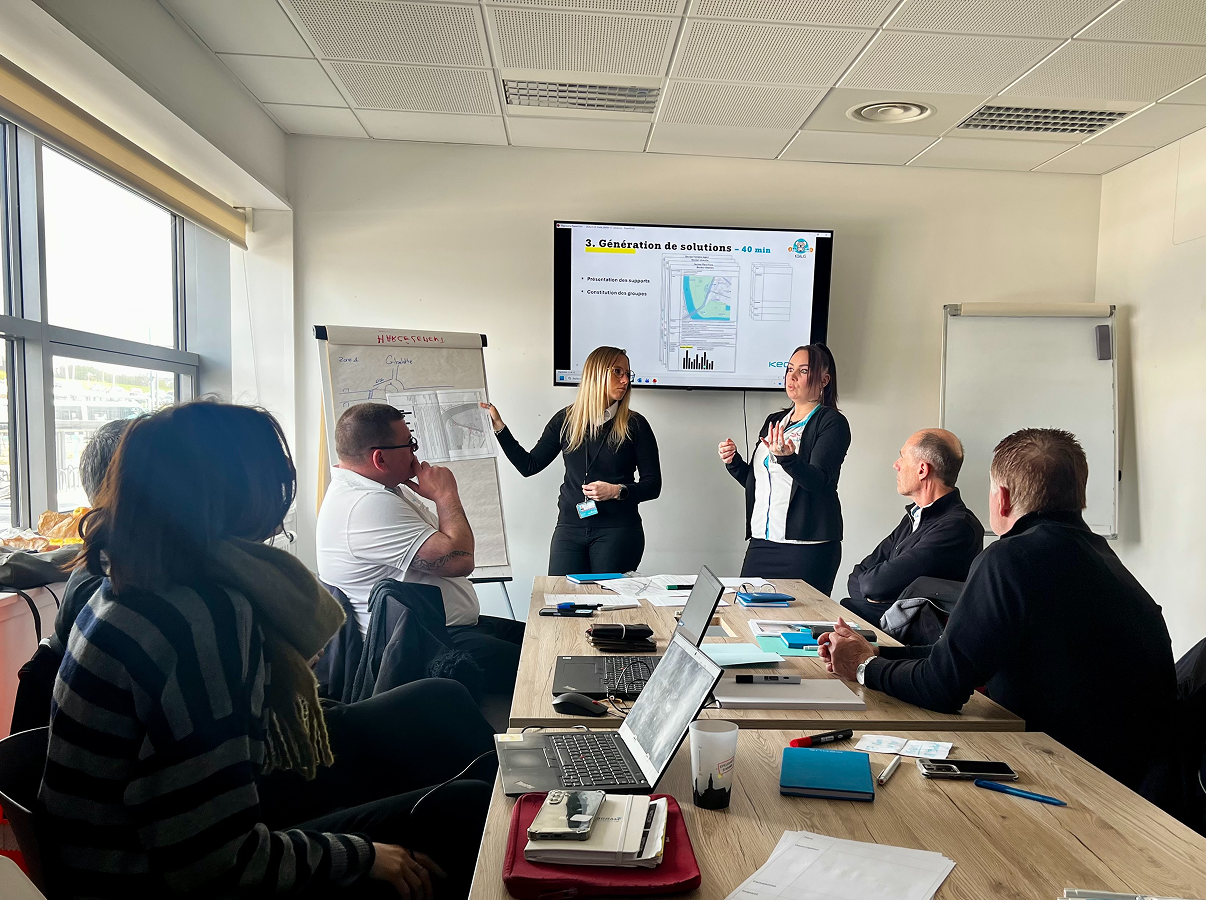
    • Next comes the joint assessment with local stakeholders. Mobility Authorities, driver representatives, local cycling and pedestrian associations, road authorities and passengers help clarify the situations, understand their causes and set priorities. The workshops produce a shared assessment and potential actions tailored to each site.

    • Finally, the approach includes a phase of testing and evaluation. One or two reversible solutions are trialled at a priority site. Monitoring compares conditions before and after, using indicators such as incidents, near misses, perceived safety and bus service regularity. The results are intended to inform decisions on whether to adapt, expand or discontinue the measure.

    CapMob addresses three key challenges:

    • Objectively identifying conflict areas rather than relying solely on isolated perceptions.

    • Co-developing solutions suited to the local context with all stakeholders.

    • Establishing a framework for operational testing before making irreversible infrastructure decisions.

    In Besançon, an approach designed for real-world conditions

    CapMob was designed to be replicable across different transport networks. In Besançon, the teams at Keolis Besançon Mobilités have adapted the approach to the region’s specific characteristics under the name Koalis. An initial assessment is underway, with the goal of gradually involving the various stakeholders.

    In Besançon, the work draws on several sources:

    • Operational and safety data

    • Tram emergency braking data

    • Sudden bus decelerations

    • Driver feedback and on-site observations

    Combining these sources makes it possible to map conflict points and identify the areas that should be examined first.

    Carol Ambrosini

    Carol Ambrosini

    Marketing, Customers & Mobility Director, Keolis Besançon Mobilités

    "The road is a shared space, but sharing it doesn’t always come naturally. With CapMob, we want to better identify risky situations and take practical action to make travel safer for everyone."
    employee discussion workshop

    What are the next steps for Koalis and CapMob?

    In Besançon, discussions with people who use the roads—including pedestrians, cyclists and scooter users—are ongoing. The Keolis Besançon Mobilités teams are gathering their feedback and impressions through their customer listening platform, Ginko Vox.

    The assessment, based on combining data with customer feedback, is being refined and will soon be shared with the technical teams at Grand Besançon Métropole. The aim is to develop an action plan with local partners.

    The selected solutions can then be tested and evaluated. This stage will help determine how well they work in real-world conditions and decide what happens next based on the results.

    Carol Ambrosini

    Carol Ambrosini

    Marketing, Customers & Mobility Director, Keolis Besançon Mobilités

    "Our ambition is to help create a calmer urban environment where buses, trams, cyclists and pedestrians can share the road more harmoniously. Koalis gives us a framework to make progress together over the long term."

    Across the Group, Keolis aims to build on the lessons learned from CapMob to establish a common approach to assessment, consultation, and pilot projects, as well as a catalog of proven initiatives. Each network will thus be able to draw on the experiences of other regions to develop solutions tailored to its own challenges.

    Read also