Four complementary psychological dimensions investigated
As part of this study, the methodological approach first consisted in clarifying what respondents mean by “AI”: at what point a tool is perceived as such, and which types of tools are actually used. On this basis, four complementary psychological dimensions were investigated:
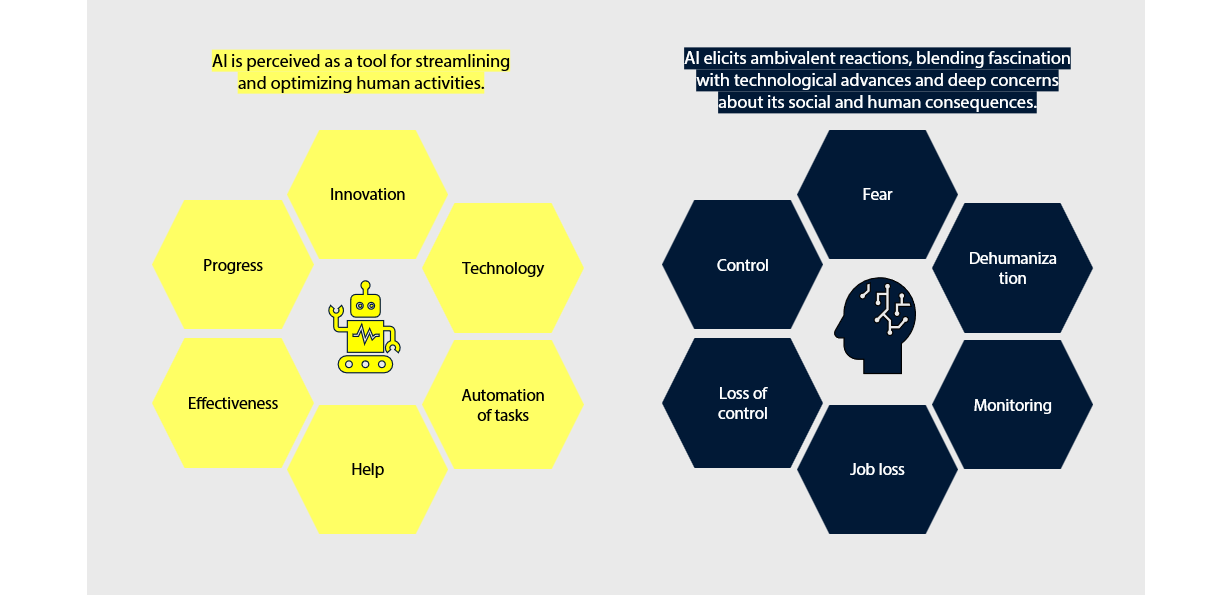
Attitudes: identifying users’ overall perception of AI, whether favorable, cautious, or neutral, and the associated representations (opportunity, risk, innovation, ease of use).
Propensity to use: measuring users’ willingness to resort to services incorporating AI, taking into account their interest in and familiarity with the technology, their perceived ability to adopt it within their social environment, and their individual propensity to delegate tasks.
Trust: assessing the degree of trust placed in AI, particularly with regard to reliability, transparency, ethics, protection of personal data, and security.
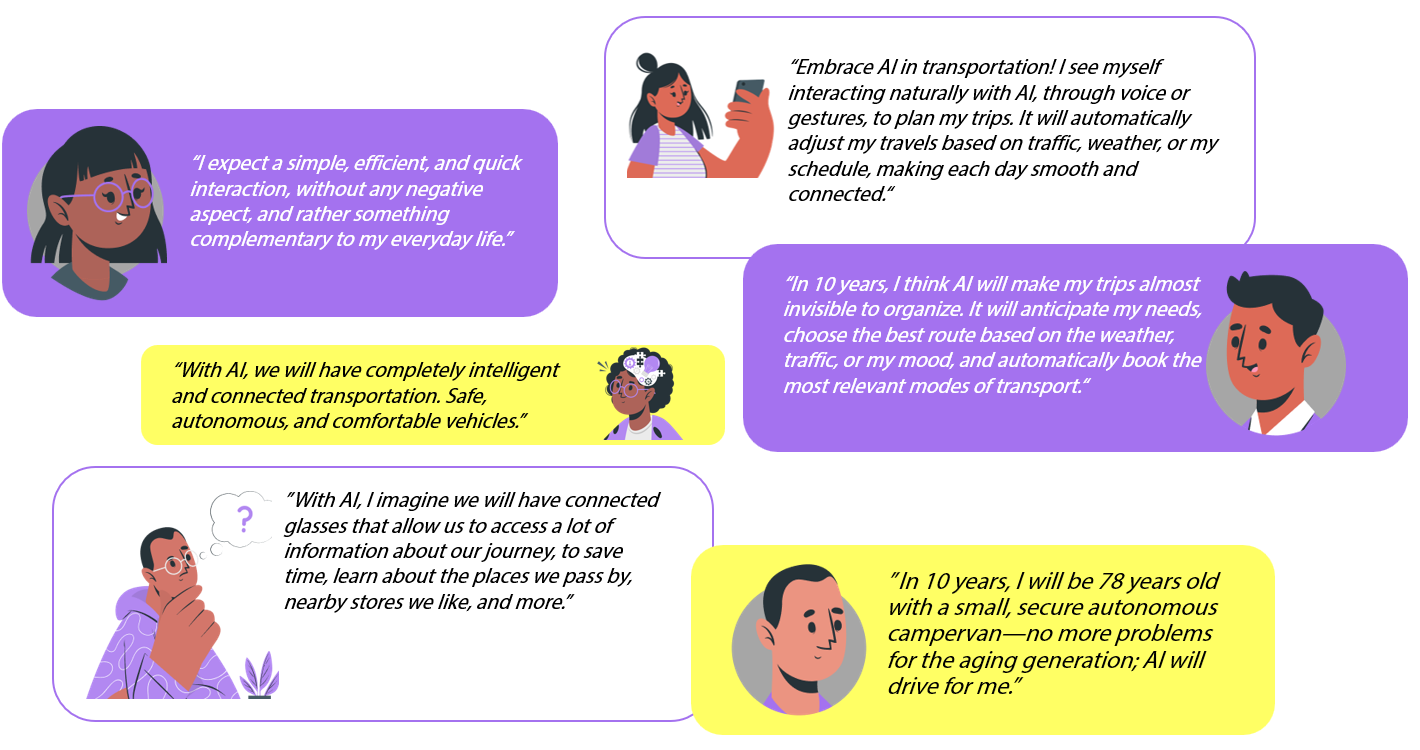
Future outlook: gathering users’ expectations and concerns regarding the future developments of AI, in order to anticipate its potential impact on their mobility practices and, more broadly, on their daily lives.