Projects

What the unconscious reveals about our mobility choices

The way we approach different forms of mobility depends on how we perceive them. Do we, unconsciously, associate public transport, cars or alternative mobility options with values like practicality and sociability? Or, on the contrary, do they spontaneously cause feelings of insecurity or constraint in us? Keolis’ Innovation Department conducted a study on how different traveler profiles perceive mobility, with the aim of evolving it and ultimately making public transport more attractive.

Partners

Posted

FEB. 5, 2026

Share on

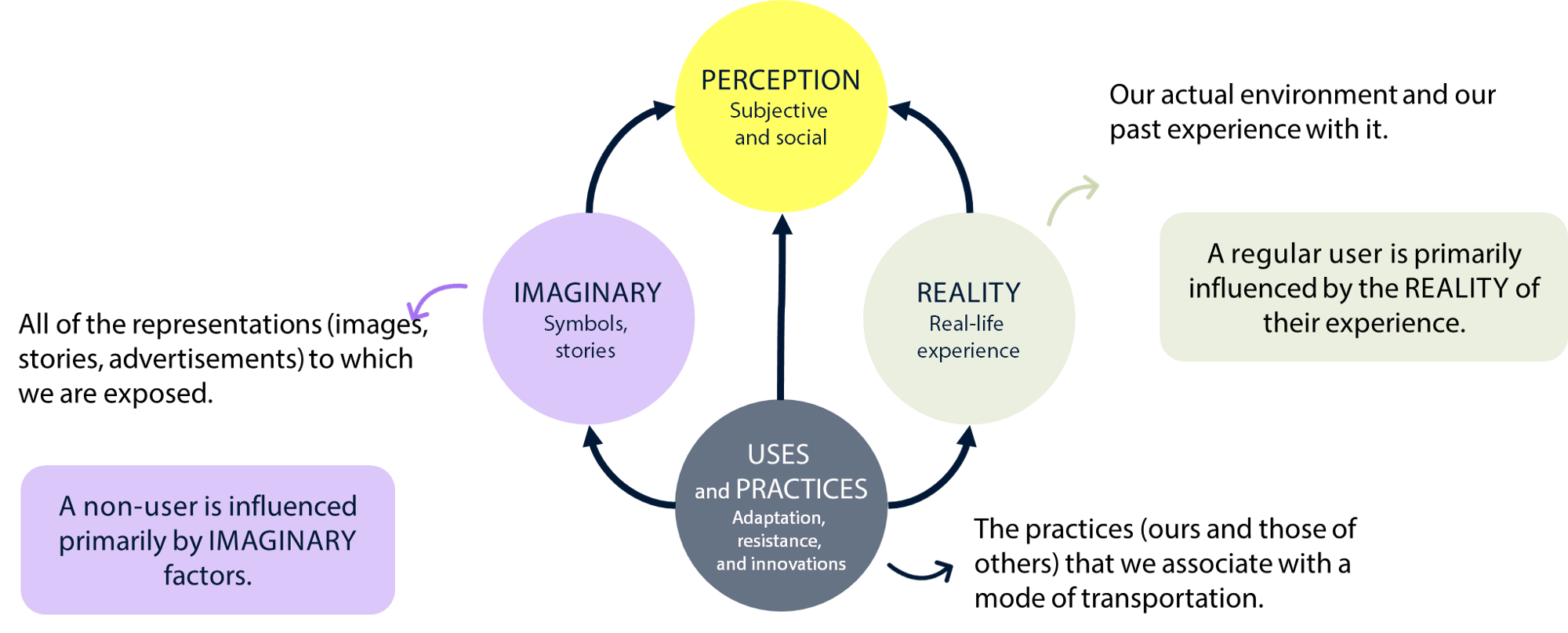
A perception of mobility influenced by three factors

 1 - Reality is our immediate environment and our past experience with it. In mobility, this includes, for example, our physical environment (the vehicle, the street…) as well as concrete information we receive about it, such as passenger information.

 2 - Uses cover the different practices we associate with mobility. This category includes how we use transport, the behaviours of other users around us, possible adaptations of our own behaviour, and innovations that are regularly introduced.

 3 - Imaginaries, finally, are the set of representations to which we are exposed, whether they come from the news, fiction or advertising, and whether they are based on reality or not.
Brain drawing
What unconscious values do we associate with public transport, soft mobility, or individual transport?
A perception of mobility influenced by three factors: imaginary, reality and uses & practices

100

participants in the implicit tests protocol

3

target populations: captive users, choice users, and non-users of public transport

120

test sequences performed per participant

15

target values tested: pleasant, well-being, expensive, trust, constraining, sociable, ecological, easy, flexible, insecurity, practical, fast, health, serenity, rewarding

4

seed concepts evaluated: bus/coach, car, bicycle and on-demand transport

12 000

data points collected

Each traveler profile is influenced in its perception in a different way. A non-user of public transport will have a perception mainly influenced by imaginaries, whereas a regular user will be primarily influenced by reality and by their own travel experience.

For example, the notion of insecurity is often associated with public transport by non-users and occasional users over 40. But far from being supported by the reality of their experience, this notion — based on analysis of collected testimonies — is often confused with incivility or with a more general discourse about public-space insecurity, not specifically the mode of transport. This perception, decoupled from actual experience, therefore falls into the category of imaginaries.

An implicit testing methodology that makes the unconscious speak

In 2025, the Group’s Innovation Department, in partnership with Mental Eco, conducted a large-scale study to better understand perceptions of different modes of mobility: public transport, on-demand transport, as well as private cars and bicycles. Based on an implicit tests protocol, this study made it possible to identify the unconscious links travelers form between these mobilities and different values: practicality, ease, speed, sociability, constraint, insecurity, as well as trust and flexibility.

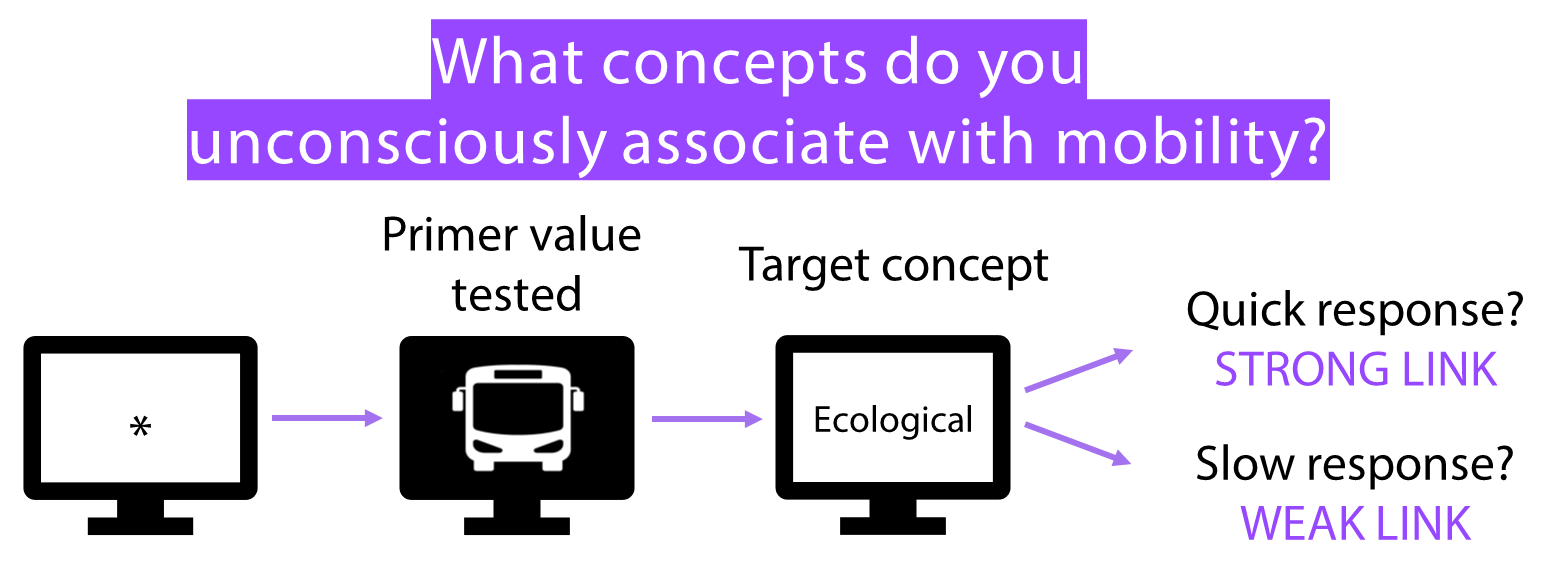
Primer value  tested, then target concept like Ecological: Quick response ? strong link and slow response ? weak link

An implicit testing protocol aimed at identifying the concepts unconsciously associated with each mobility: the faster the response, the more natural and revealing the association is of the presented mode of mobility.

To highlight differences in perception according to mobility habits, this study was carried out on three populations with distinct uses: captive users of public transport who have no alternative, occasional public transport users who choose that mode, and non-users of collective mobility. These studies were conducted in peri-urban and rural areas where the car remains competitive.

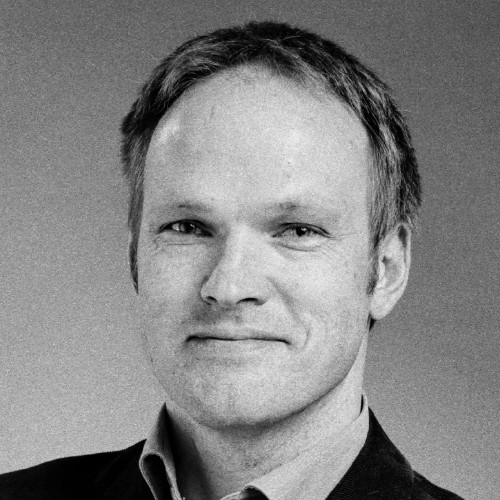
Gaël Allain photo

Gaël Allain

Doctor in Cognitive Psychology, specialist in mental load and founder of Mental Eco

"The survey using implicit methods reveals stable associations between modes of transport and psychosocial values (practicality, sociability, insecurity, constraint). These automatic representations strongly influence decisions and limit the effect of supply adjustments alone. Identifying these biases makes it possible to design targeted interventions and prototypes (cognitive diagnostics, narrative and architectural elements, controlled tests) to reconfigure representations and measure changes in usage."
Results that challenge the place of public transport in our perception

Results that challenge the place of public transport in our perception

Among the insights revealed by this study, several deserve to be highlighted and can change common assumptions about mobility perception:

  • Public transport is associated both with a notion of insecurity and with sociability.

  • The car is not distinguishable from public transport in terms of ease or practicality. For practicality specifically, on-demand transport stands out positively.

  • The perception of expensiveness of both public transport and cars is primarily linked to the purchasing power of respondents: both modes are considered expensive by the under-25 population with reduced purchasing power.

  • Differences in perception are sometimes linked to generational biases: for instance, those under 25 see the bicycle as rewarding, while those over 40 see all modes of mobility as constraining.

Loyal, Demanding, Reluctant: 3 traveler populations with distinct perceptions

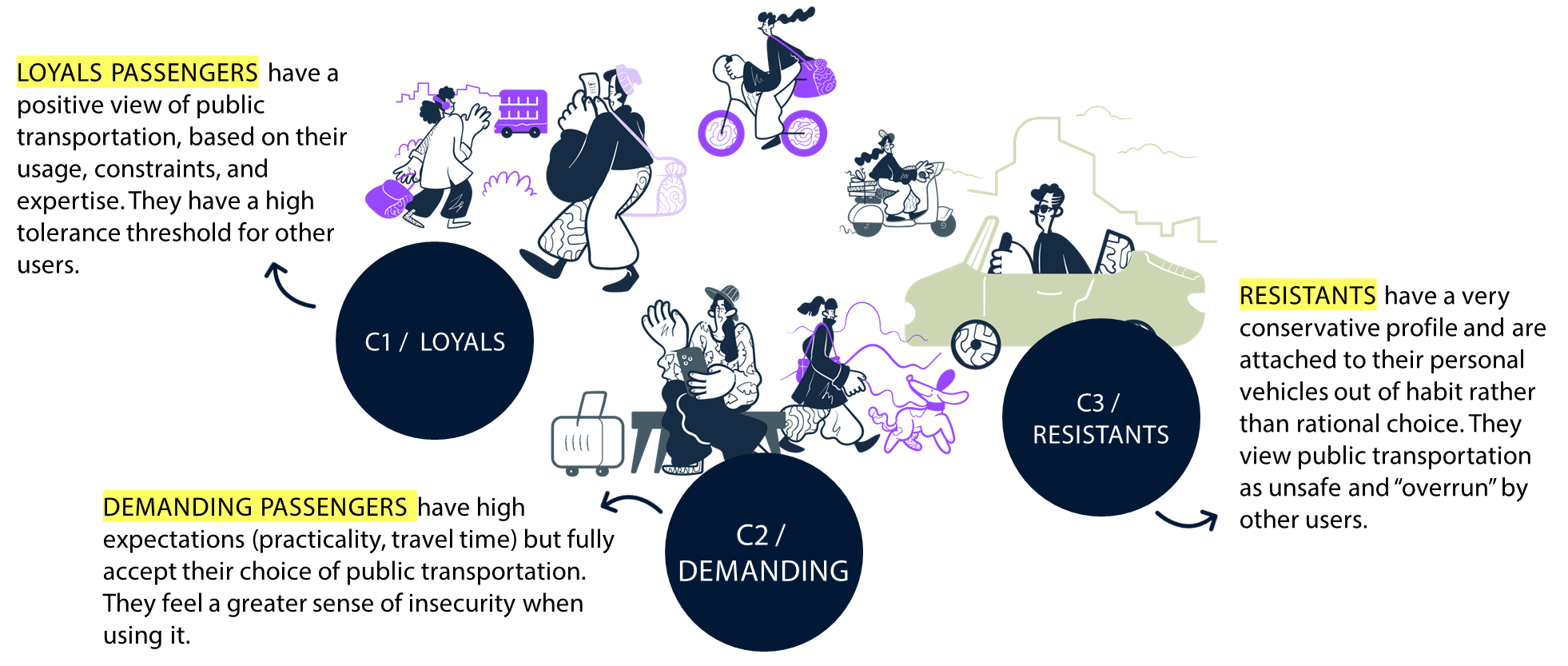
All collected traveler data highlight perception differences that are mainly related to mobility habits. While captive users (The Loyal) have a positive view of public transport and a high tolerance for other users, non-users (the Resistant), who habitually use their car, retain a perception of collective transport as unsafe and feel “invaded” by other users. Occasional public transport users (the Demanding) are pragmatic: while they accept their mobility choice, they have high demands regarding its practicality and travel time, but they also express a stronger feeling of insecurity than captive users.

Loyal, Demanding, Reluctant: 3 traveler populations with distinct perceptions

For these three populations, perception of public transport remains closely linked to the perception of other users, and to the mental and emotional load they generate.

Sofia Escamilla photo

Sofia Escamilla

UX Strategist & Researcher – Innovation Department Keolis

"In this exploration, we show that mobility choices are not explained only by rational criteria: they are also guided by mental representations and perceptions. To make collective mobility desirable, it is necessary to act on the imaginary (sociability, perceived safety, mental load) as much as on the service offer. By making the identified implicit biases visible and prototyping levers to reconfigure them, the experimental phase aims to sustainably transform usage."

Influencing perceptions to change habits

Thanks to these insights, Keolis teams are now planning a second phase of the study based on experimentation: how to change the habits of the three identified populations by acting on their respective perceptions of public transport? Through targeted communication, education and information actions, Keolis aims to influence imaginaries, uses and perception of reality in order to strengthen the ambassador role of the most Loyal users and encourage Demanding and Resistant users to adopt greater use of collective mobility.

Thus, four work axes will be explored over the coming months:

  • Re-emphasize the values of sociability and freedom associated with public transport to better compete with the perception of the private car;

  • Reduce the mental and emotional load associated with public transport by highlighting the real mobility experience, notably its simplicity;

  • Develop multimodality, by increasing users’ expertise and proactivity and by optimizing everyone’s practices;

  • Change the narrative around public transport by boosting enthusiasm through communication focused on its real advantages.

These various experiments will be conducted in the field in coordination with our subsidiaries in the coming months.

drawing
Next phase of field testing: how can we change the habits of the three identified populations by influencing their respective perceptions of public transportation?

Lire aussi